
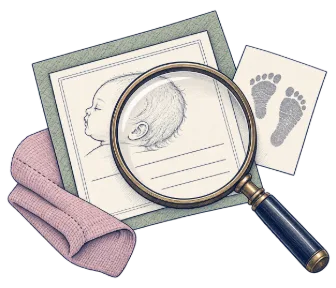
Before buying a reborn doll online, check whether the photographs, description, provenance and seller’s answers agree. No single detail proves authenticity, but gaps and contradictions tell you what to ask next.
Check which doll the photographs show
Look for clear photographs of the exact finished doll, including the face, hair, hands, feet and body. Ask for close-ups of any damage or repair.
If the listing uses prototype pictures or another artist’s examples, it should say so clearly. The doll you receive may look different. Images appearing elsewhere are a reason to investigate ownership and permission, not automatic proof of a scam.
Ask for a new photograph or video with a detail you specify if you need to establish that the seller has the doll. This adds evidence, but is not a guarantee on its own.
Match the sculpt and artist details
Ask for the kit or sculpt name, its maker and the artist who painted the finished doll. Compare these with information from the sculptor or authorised kit supplier.
If parts have been replaced or mixed, ask the seller to explain what changed. An alteration should be described accurately rather than left for you to discover after delivery.
Read the certificate information carefully
Ask whether a certificate of authenticity is included and who issued it. Check that any stated name or edition matches the doll. Paperwork varies, so a missing certificate needs context.
A copied or mismatched certificate is a separate concern. A decorative birth certificate, head marking or printed logo does not establish the full provenance of the finished doll by itself.
Check materials and condition
- What are the head, limbs and body made from?
- What is the doll weighted with, and what are its length and weight?
- Is the hair painted, rooted or a combination?
- Are magnets fitted?
- Are there stains, shine, loose attachments, hair loss or repairs?
- Is the doll new, pre-owned or made to order?
Ask for plain answers to unclear terms. “Silicone vinyl”, for example, does not tell you which material each part is made from.
Use price as a question
An unusually low price alongside highly detailed photographs deserves a closer look. It may have a reasonable explanation, such as pre-owned condition, disclosed faults or a newer artist, but the seller should describe what is actually being sold.
Do not use a high price as reassurance on its own. Compare the work and condition using the price guide for context.
Check the seller and sale terms
Look for consistent contact information, previous work and relevant buyer feedback. A new artist may have a small portfolio, so ask clear questions rather than assuming that few reviews prove dishonesty.
Read the total price, delivery information, returns terms and any deposit or payment-plan conditions. Check the payment method’s current protection terms. Keep the listing and conversation with your receipt.
Pause when answers do not agree
Do not pay while important details are unresolved or because you are being pressured to act. If you suspect a misleading listing, use the platform’s reporting process and describe the evidence rather than making public accusations you cannot substantiate.
The authenticity explainer separates counterfeit kits from factory-made dolls and other listing problems. The buying guide covers artists, shops and pre-owned sales.