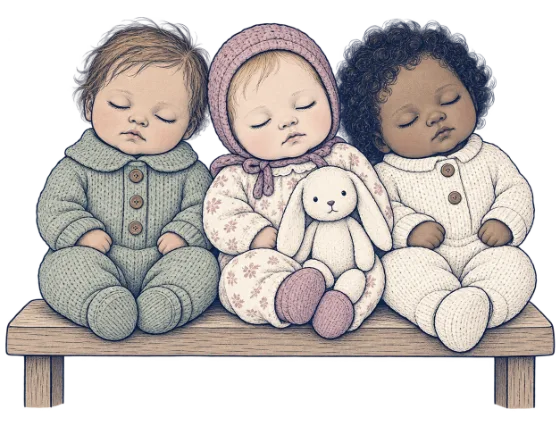
A reborn doll is a realistic art doll, painted and finished to resemble a baby or young child. The details may include layered skin tones, painted veins, carefully arranged hair and weighting that changes how the doll feels when held.
A reborn is still a doll. The realism comes from its sculpt, materials and the artist’s work, rather than from it being a living baby.
The sculptor and the reborn artist
The sculptor creates the original form, including the face, hands and limbs. A kit made from that design gives the reborn artist a starting point. The artist then paints, adds or paints hair, assembles and finishes the individual doll.
A kit name and an artist name therefore describe different parts of its history. Two artists can use the same sculpt and produce dolls with different skin tones, hair and overall character.
How the finish is created
- Painting builds colour and detail in layers, including features such as mottling, blushing and veins.
- Hair may be painted onto the scalp, rooted as fibres or made with both techniques.
- Eyes and lashes depend on whether the sculpt is awake or asleep and how the artist finishes it.
- Assembly and weighting determine how the head, limbs and body are supported and how the doll feels when lifted.
There is no single number of painting layers or hours that every reborn must have. The finished work, construction and condition matter more than a large number in an advert.
Vinyl, cloth and silicone
Many reborns have vinyl heads and limbs attached to a cloth body. Moon & Milk’s dolls use that construction, with glass-bead weighting. The cloth body is covered by clothing and needs to stay dry.
Silicone dolls have different construction and care needs. Do not assume a doll is silicone because a listing calls it soft, lifelike or full-body. Check the named material and which parts are made from it.
Painted and rooted hair
Painted hair creates a fixed style without fibres to groom. Rooted hair adds texture but needs careful brushing and handling. Combination hair includes both.
The painted and rooted hair comparison explains what each means for everyday care.
Why people collect them
Some collectors are interested in the painting and sculpting. Others enjoy holding their dolls, dressing them, creating photographs or sharing the hobby with other collectors. A doll may have personal meaning, but there is no required reason for owning one.
The guide to why people collect reborns explores those different interests without assuming every collector wants the same experience.
What the word does not guarantee
The word “reborn” in an advert is not proof of a doll’s materials, provenance, quality or suitability for a child. Look for photographs of the actual doll, the sculpt and artist names, construction details and a clear description of its condition.
For a first purchase, Reborn dolls 101 brings together the buying and care questions. If you want to know who makes the dolls here, you can read about Aya and Moon & Milk.
Thinking about buying your first doll? My guide to where to buy reborn dolls in the UK compares artists, specialist sellers and pre-owned dolls, with questions to ask before paying.